
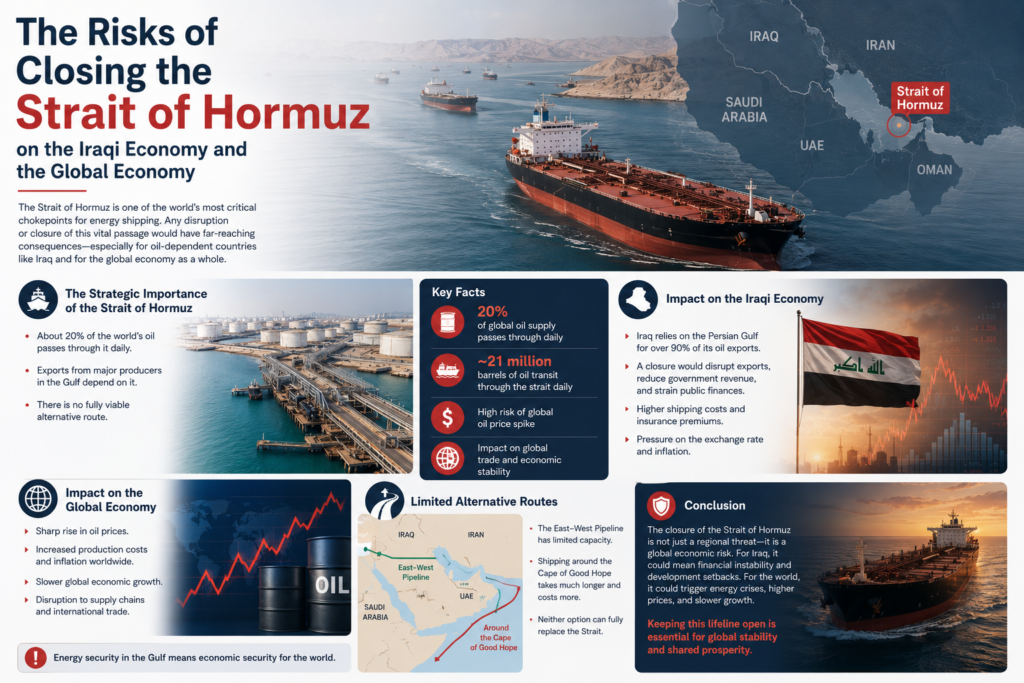
The Strait of Hormuz is one of the world’s most strategically important maritime chokepoints, crucial for global energy supplies. It is a narrow passage that connects the Persian Gulf with the Arabian Sea and the Gulf of Oman. This strait is a vital conduit for oil exports, with about 20% of the world’s petroleum passing through it. Therefore, any disruption to the flow of oil through the Strait of Hormuz can have significant repercussions on both regional and global economies. Let’s explore the potential risks, focusing on the Iraqi economy and the wider global implications.
Impact on the Iraqi Economy
- Oil Export Disruptions:
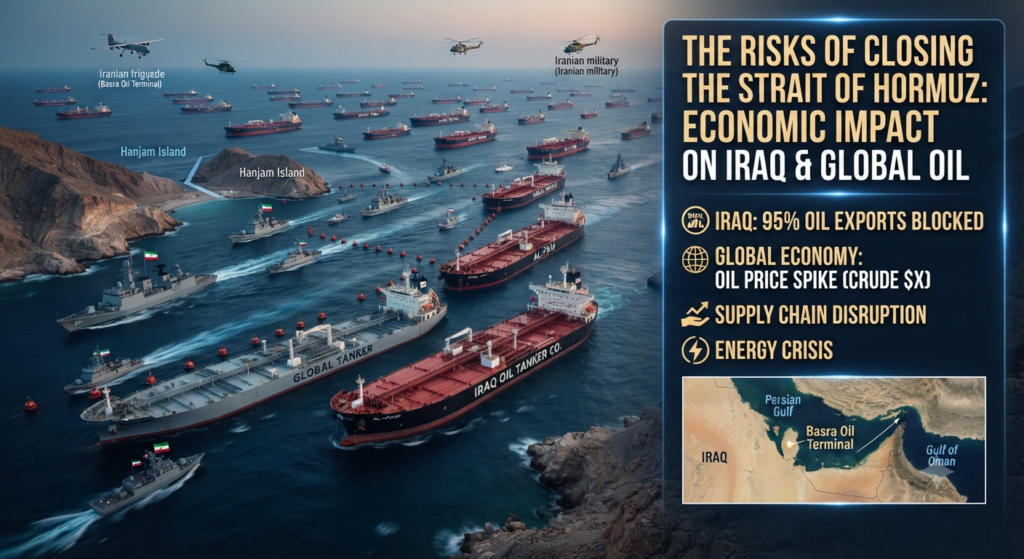
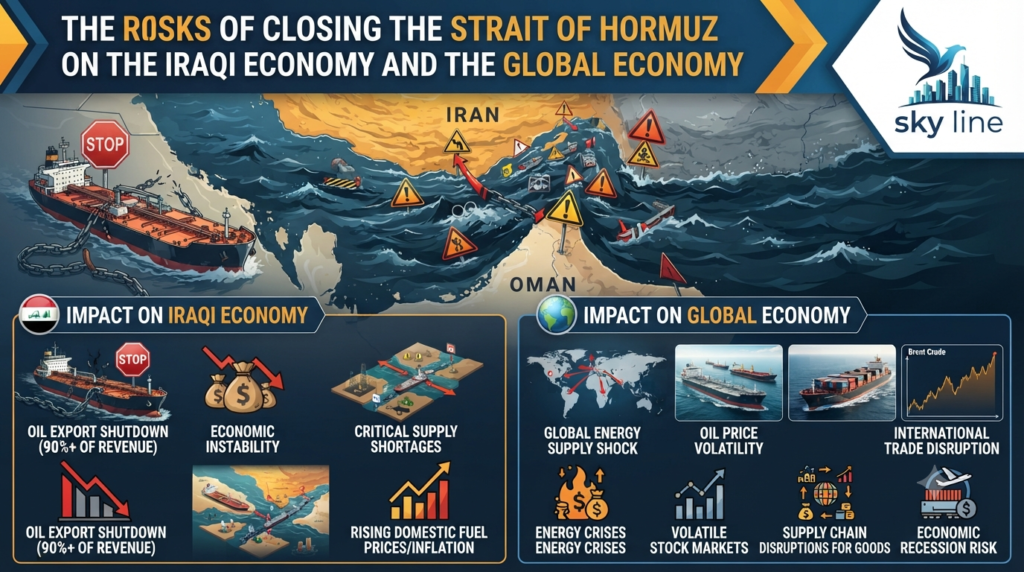
Iraq heavily relies on oil exports for its national revenue. The closure of the Strait of Hormuz would impede Iraq’s ability to export oil, leading to a substantial loss in income. This could severely affect the country’s economic stability, given that oil revenues constitute a significant portion of Iraq’s GDP and national budget. - Increased Transportation Costs:
If the Strait of Hormuz is closed, Iraq may need to find alternative, longer routes for oil transportation. This would increase shipping costs and reduce the competitiveness of Iraqi oil on the global market, further straining the country’s economy. - Economic Uncertainty and Instability:
The disruption of oil flow would create economic uncertainty, deterring foreign investment in Iraq. Additionally, internal instability may rise as public services and development projects face funding shortages due to decreased oil revenues.
Global Economic Implications
- Rising Oil Prices:
The Strait of Hormuz closure would lead to a significant reduction in the global oil supply, driving up oil prices. This spike in prices could lead to increased costs for transportation and production worldwide, affecting various sectors and potentially triggering inflation. - Supply Chain Disruptions:
The global supply chain could experience significant disruptions as industries dependent on petroleum products face shortages. This would affect manufacturing, logistics, and even the production of goods, leading to delays and increased costs. - Geopolitical Tensions:
The closure could exacerbate geopolitical tensions in the Middle East, leading to instability that impacts global markets. Investor confidence may waver, resulting in volatile stock markets and affecting global economic growth. - Energy Security Concerns:
Dependence on the Strait of Hormuz for oil transportation highlights the vulnerability of global energy security. Countries may be prompted to seek alternative energy sources or diversify their energy supply routes to mitigate such risks in the future.
The Risks of Closing the Strait of Hormuz on the Iraqi Economy and the Global Economy
in conclusion, the closure of the Strait of Hormuz presents significant risks to both the Iraqi economy and the global economy. While Iraq would face immediate fiscal challenges due to its reliance on oil exports, the global economy would also suffer from increased oil prices, supply chain disruptions, and heightened geopolitical tensions. It is crucial for nations to collaborate on maintaining the security of this vital maritime passage to ensure economic stability and energy security worldwide.
The Risks of Closing the Strait of Hormuz on the Iraqi Economy and the Global Economy
